 Art Oslo
Museums
Art Oslo
Museums
Timber and the deep past
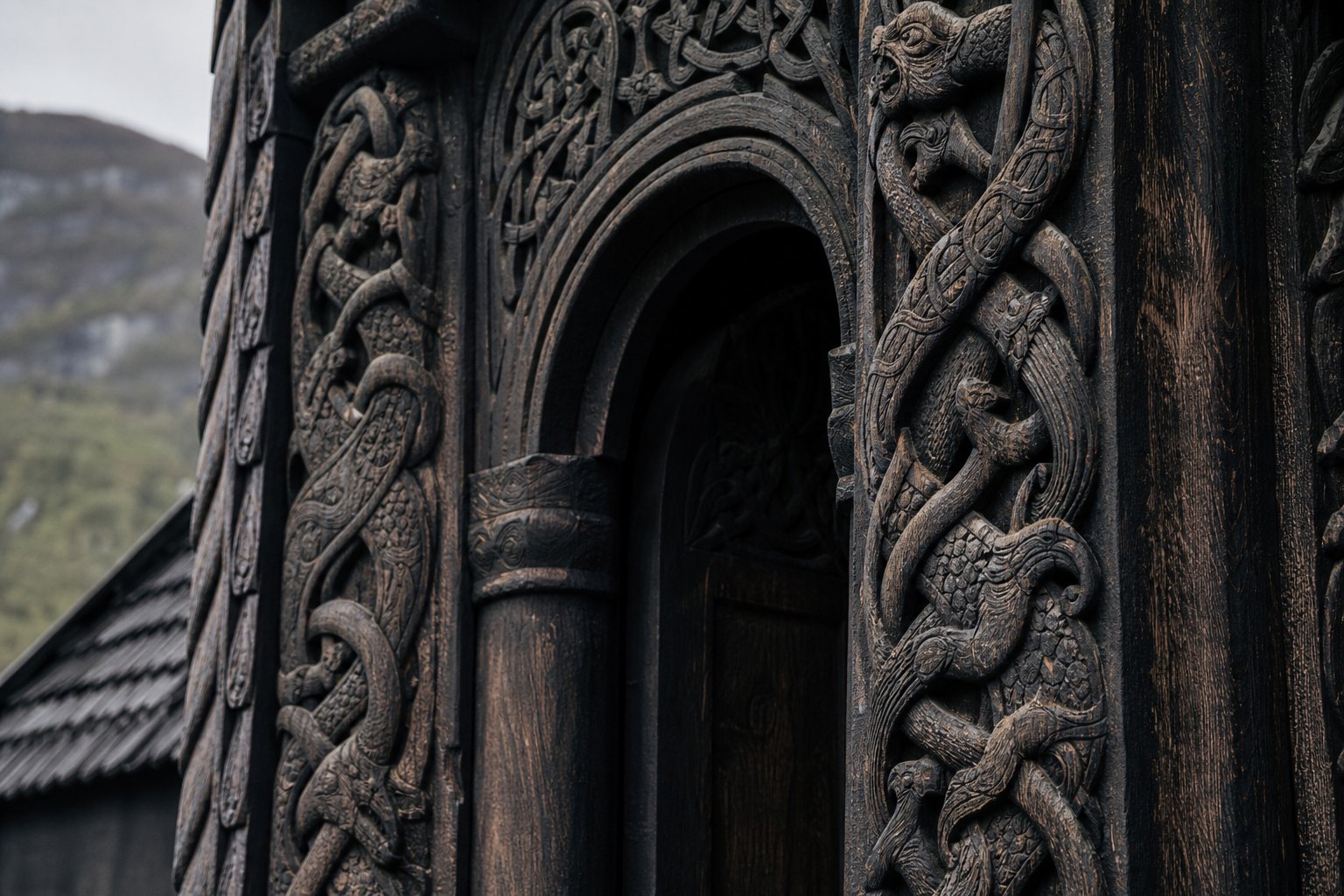
The oldest museum architecture in Oslo is the architecture the museums were built to save. The Gol Stave Church at the Norwegian Museum of Cultural History, raised around 1200, is a cathedral in wood — dark, tar-scented, its gables crowned with dragon heads. Around it stand 160 reassembled timber buildings, a catalogue of how Norwegians built before stone.
The age of the institution
As the city grew, it gave its collections grand homes. The Historical Museum of 1904, by Henrik Bull, is among the finest Art Nouveau buildings in Scandinavia, its entrance carved with intertwining figures. The Vigeland Museum of the 1920s was purpose-built by the city for a single sculptor, its high, north-lit halls designed around the scale of monumental plaster.
Glass on the water
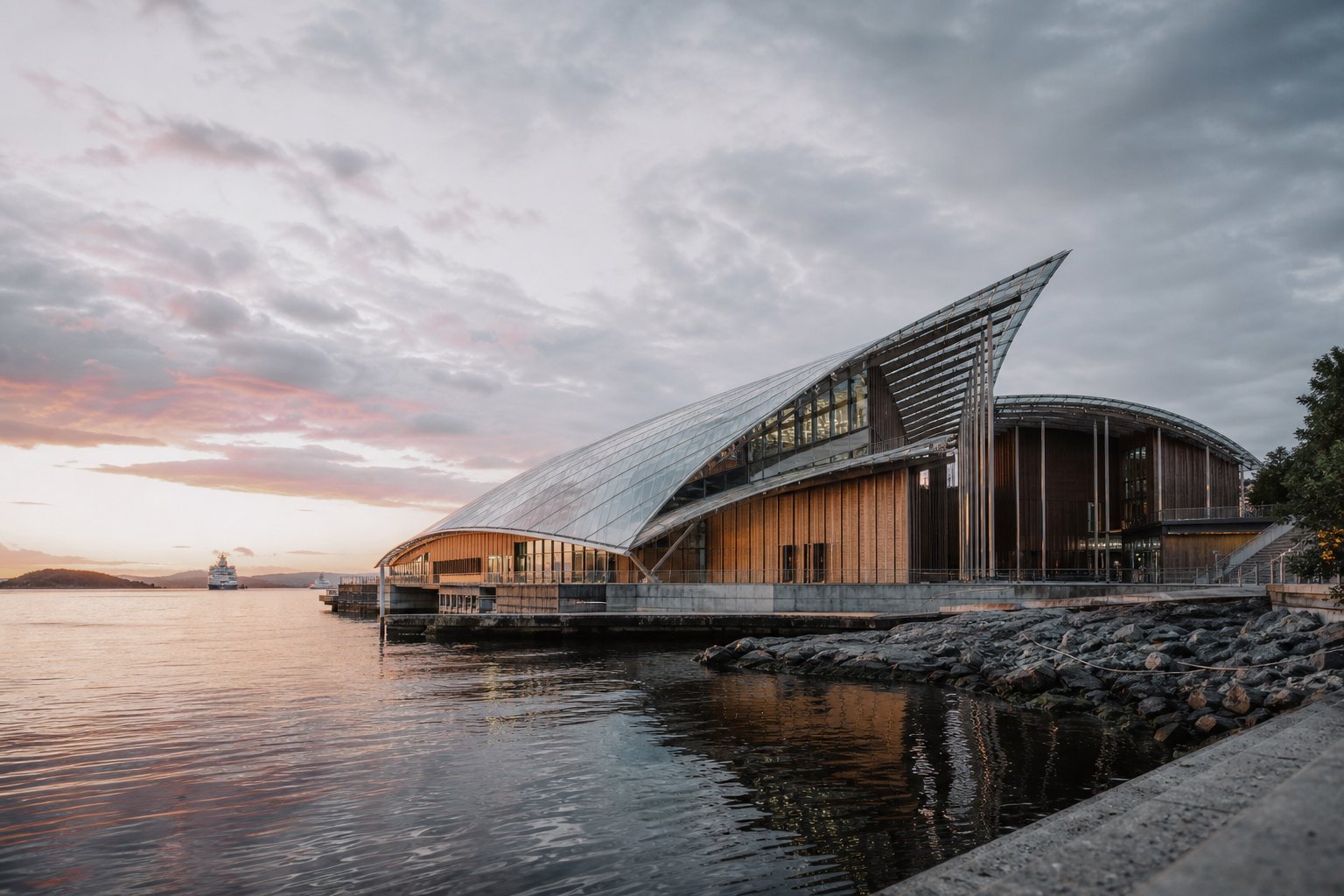
Contemporary Oslo has turned decisively to the fjord. Renzo Piano's Astrup Fearnley Museet of 2012 spreads two timber pavilions beneath a single curved glass sail at the tip of Tjuvholmen, divided by a canal so the building dissolves into the harbour. It set the template for a waterfront where museums and the sea are deliberately blurred.
The new landmarks
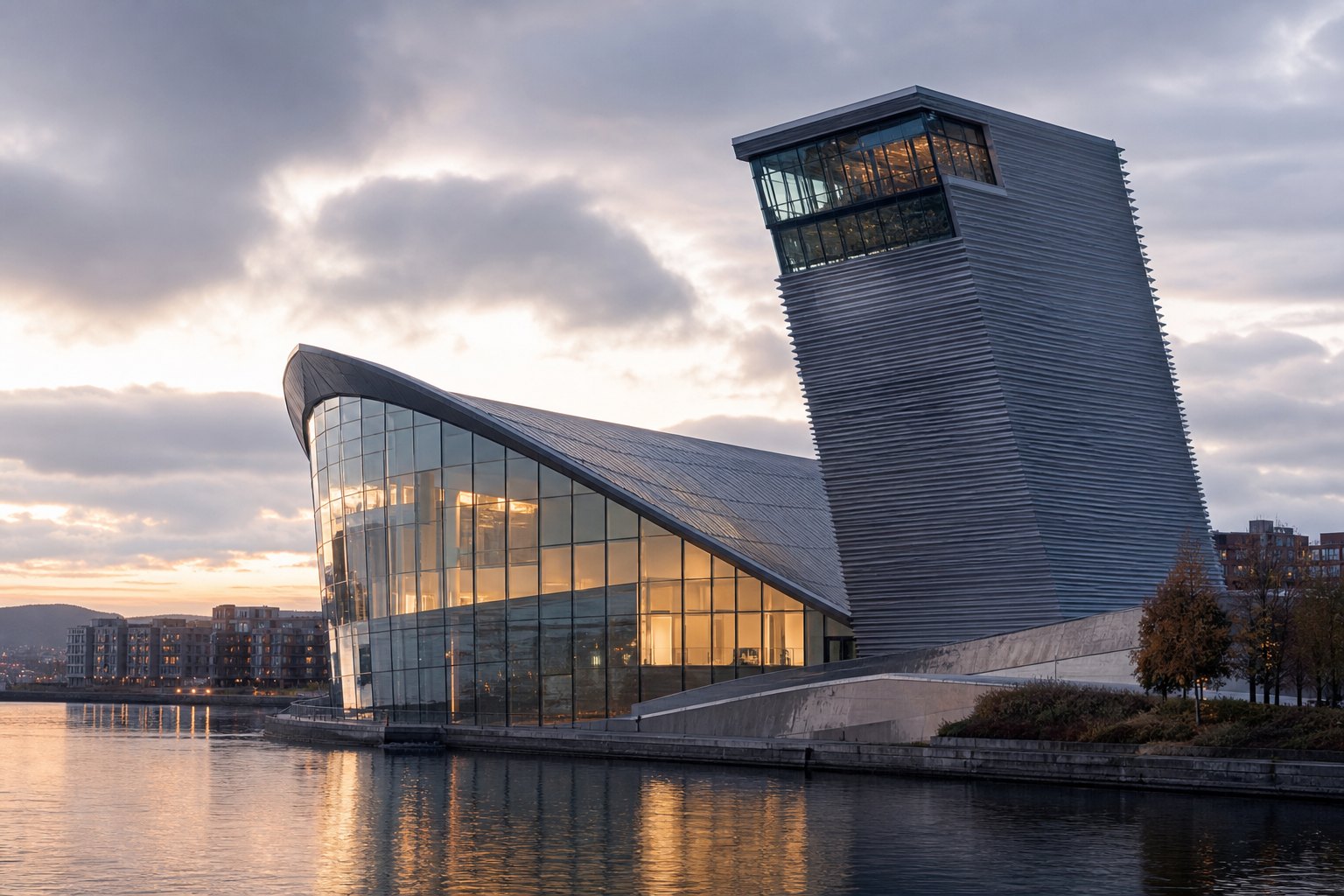
The most recent buildings are also the most debated. The National Museum of 2022, by Kleihues + Schuwerk, is monumental and deliberately austere — until its top-floor Light Hall, wrapped in translucent marble, glows from within after dark. A short walk east, the MUNCH tower by Estudio Herreros leans its upper floors toward the fjord in a gesture admired and criticised in equal measure. Whatever the verdict, both have given Oslo a skyline its nineteenth-century founders could never have imagined.
From a dragon-gabled stave church to a tower of perforated aluminium — eight centuries of building, within a single city.