 Art Oslo
Museums
Art Oslo
Museums
An artist and his city
In 1921 the city of Oslo struck an unusual bargain with its leading sculptor: it would build Gustav Vigeland a grand studio and residence, and in return he would leave it everything he made. He moved in in 1924 and worked there until his death in 1943. The building opened as a museum in 1947, with the artist's ashes held in its tower.
The studio
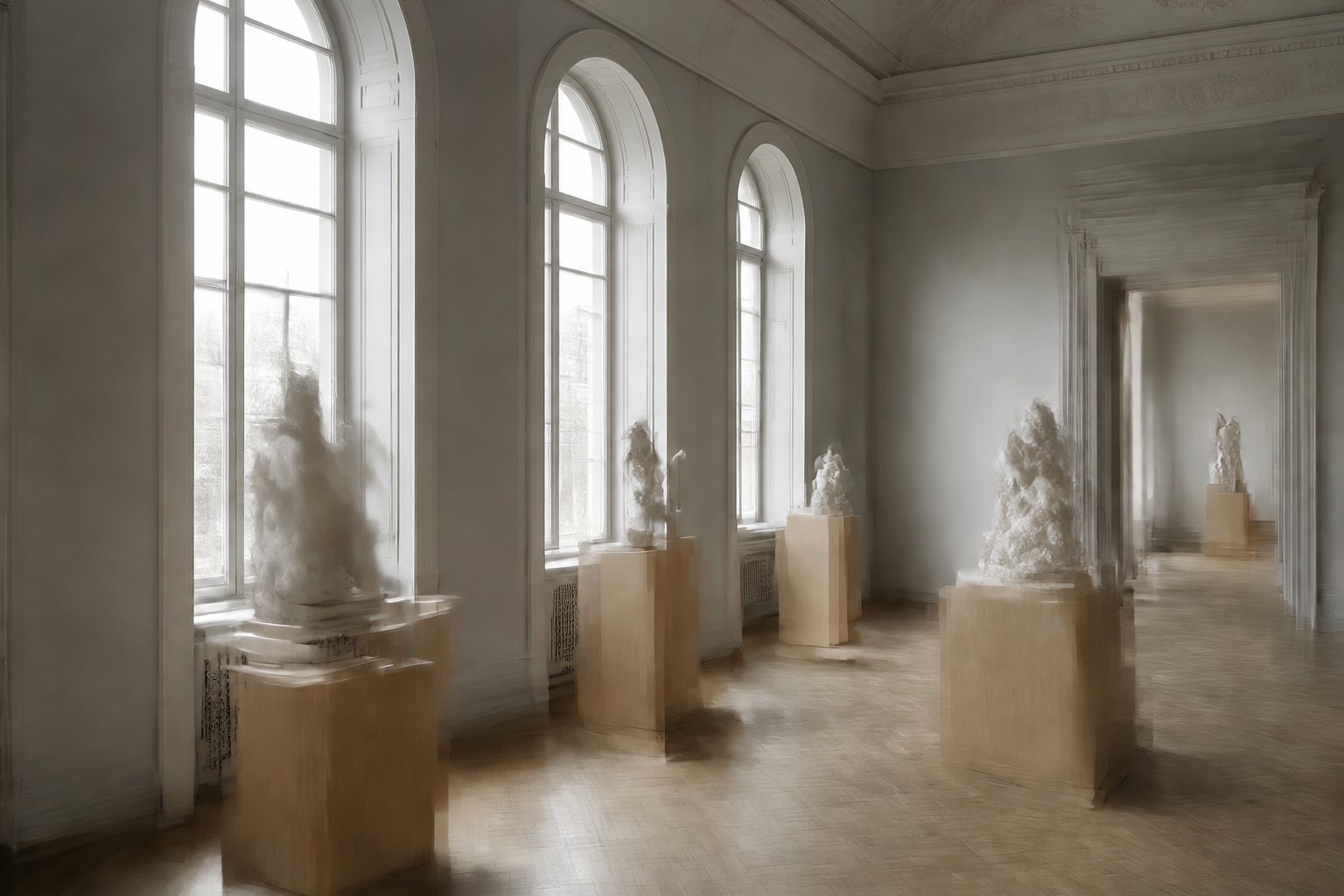
The museum preserves the plaster models, tools and working drawings behind the bronze and granite figures in the park — a rare chance to see monumental sculpture at the moment before it was cast or carved. The high, north-lit halls remain much as Vigeland left them.
The park beyond
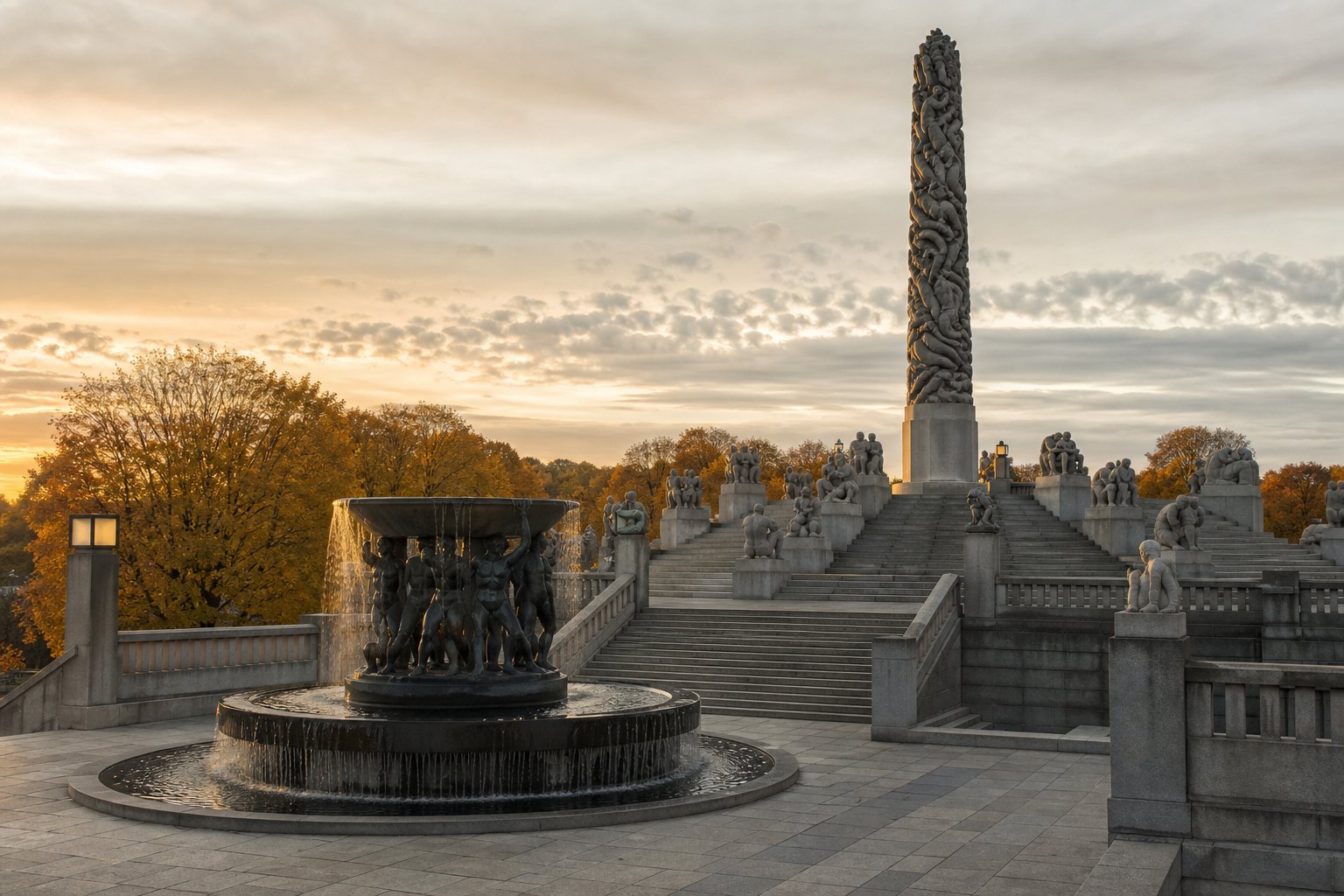
A short walk away, Frogner Park holds the Vigeland installation itself: the bridge lined with bronze figures, the great fountain, and the Monolith — a single fourteen-metre column of granite carved with 121 intertwined human bodies, the largest work of its kind in the world. The park is open at all hours and free to enter.
What to see
- The original plaster of the Monolith
- Vigeland's preserved working studio
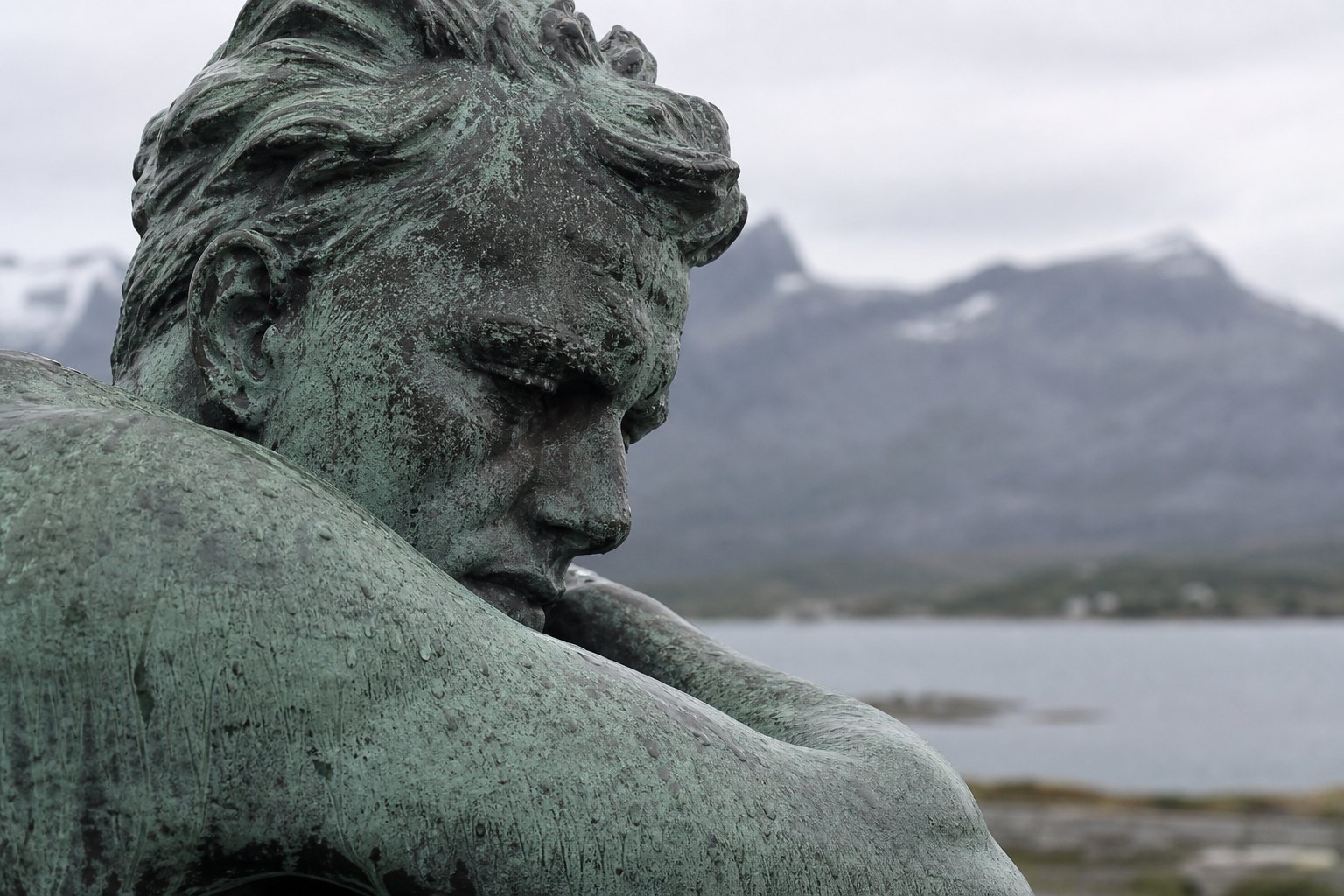
- The Angry Boy and the bronze figures of the bridge
- The fountain and granite groups in the park
A whole life's work, given to the city that housed it.